
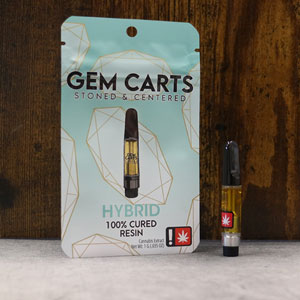
Grape Grove is a single strain extract, gently decarbed then loaded into a one gram Gem Cart.
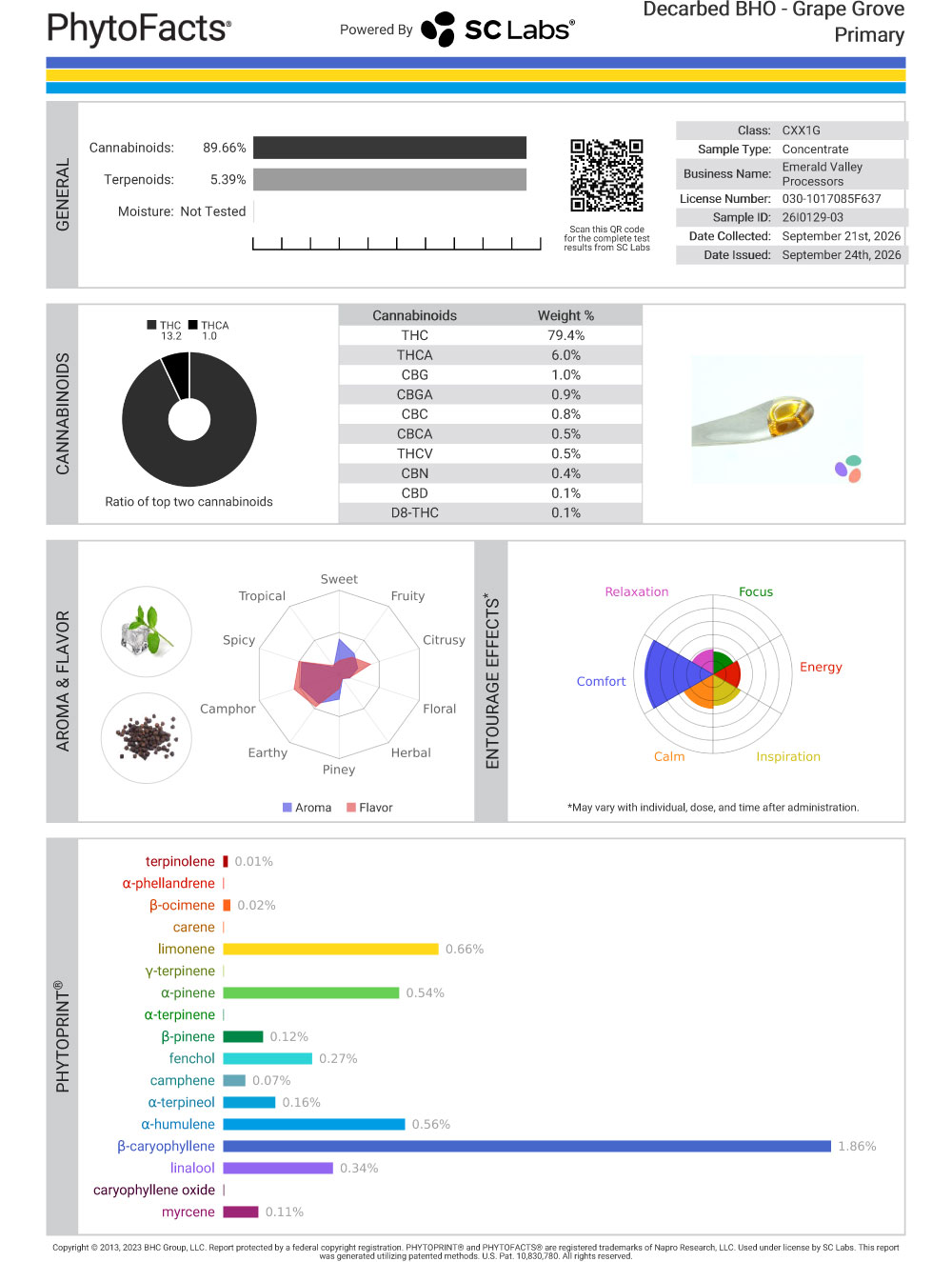
For this review we’re not only looking at the PhytoFact sheet, but we will also dive into the full terpene panel, which you can find by scanning the qr code on the PhytoFact sheet below. We will also do this with the Red Eye dab version.
Type: Hybrid
Availability: 1g Gem Carts.
Grape Grove Cart PhytoFact Sheet
The Tastes: On the inhale, expect citrus, soft floral sweetness, and a fresh green-pine edge. Despite the name, the chemistry doesn’t scream artificial grape candy. The profile looks more like bright citrus and floral fruit layered over pepper, wood, and fresh herbal notes.
The middle gets noticeably more grounded, moving into pepper, dry earth, soft wood, and a slightly balsamic floral character. The exhale should finish smooth and peppery with citrus peel, pine, light florals, and a faint sweet-fruit note hanging around underneath. “Grape” may still show up sensorially, but the terpene panel isn’t waving a giant purple flag and shouting Welch’s at us.
Let’s take a look at the numbers.
Beta-caryophyllene leads at 1.86%, giving Grape Grove its main structure. That brings pepper, dry wood, and resinous spice through the middle and finish.
Limonene follows at 0.66%, bringing the main citrus lift. Alpha-humulene comes in at 0.56%, reinforcing the dry earthy side, while alpha-pinene is unusually prominent at 0.54%. That pinene number should give the profile a noticeable fresh, green, slightly coniferous edge rather than letting it sink completely into dessert territory.
Linalool at 0.34% brings floral softness, while fenchol at 0.27% adds fresh herbal and woody character. Alpha-terpineol at 0.16%, beta-pinene at 0.12%, and myrcene at just 0.11% round out the standard PhytoFacts profile.
But the complete terpene panel gives us a few extra details worth talking about.
Farnesene shows up at 0.27%, making it one of the more substantial compounds that doesn’t appear on the standard PhytoFacts sheet. Farnesene can contribute green, woody, floral, and fruit-skin-like aromatic character. At roughly a quarter percent, it’s high enough here that I would expect it to actually matter rather than existing merely because the GC found something to do.
Even more interesting is (-)-alpha-bisabolol at 0.19%. That’s a fairly meaningful amount for a terpene we don’t usually get to see on the simplified panel. Bisabolol is associated with soft floral, woody, and mildly sweet balsamic aromas. Between that, linalool, farnesene, and alpha-terpineol, Grape Grove has a more complex floral layer than the basic PhytoFacts sheet alone suggests.
Nerolidol also shows up at 0.097%, adding another woody, floral, slightly green dimension. Smaller compounds include phytol at 0.049%, ocimene at 0.020%, eucalyptol at 0.018%, and guaiol at 0.014%. Individually those are minor, but together they help explain why this profile may smell more layered and botanical than the six or seven headline terpenes would suggest.
This is a great example of what we discuss in the latest blog post, Beyond Terpenes. The simplified report makes Grape Grove look mostly like caryophyllene, citrus, humulene, pinene, and linalool. The complete analysis reveals a second aromatic tier of farnesene, bisabolol, nerolidol, terpineol, and fenchol that should make the finished cart considerably more nuanced.
The Feels: Grape Grove lands as a balanced hybrid with a grounded base and a surprisingly fresh top end. The limonene and relatively strong alpha-pinene should give the onset some brightness and clarity, while caryophyllene, humulene, linalool, and the heavier sesquiterpenes pull things toward comfort and calm.
The PhytoFacts entourage chart leans most strongly into comfort, with moderate energy and calm and smaller relaxation, focus, and inspiration components. This one feels fairly centered rather than strongly tilted toward either end of the hybrid spectrum.
The cannabinoid side is a little unusual with the THCA number. Grape Grove comes in with 79.4% THC and a surprising 6.0% THCA remaining after decarb. It also contains 1.0% CBG, 0.9% CBGA, 0.8% CBC, 0.5% CBCA, 0.5% THCV, 0.4%.
Overall, with 89.66% total active cannabinoids and 5.39% total terpenes, Grape Grove by The Dope Depot is a tasty hybrid Gem Cart with pepper, citrus, pine, dry earth, floral sweetness, and some deeper woody-balsamic complexity.
The headline terpene profile is built around caryophyllene, limonene, humulene, alpha-pinene, linalool, and fenchol. But the complete panel makes this one more interesting by adding meaningful farnesene, alpha-bisabolol, nerolidol, and terpineol numbers.
Rating: Our lab rats give Grape Grove 8.5 pieces of cheese.
Remember, you can always see the full terpene panel on the COA by scanning the qr code on the PhytoFact sheet.
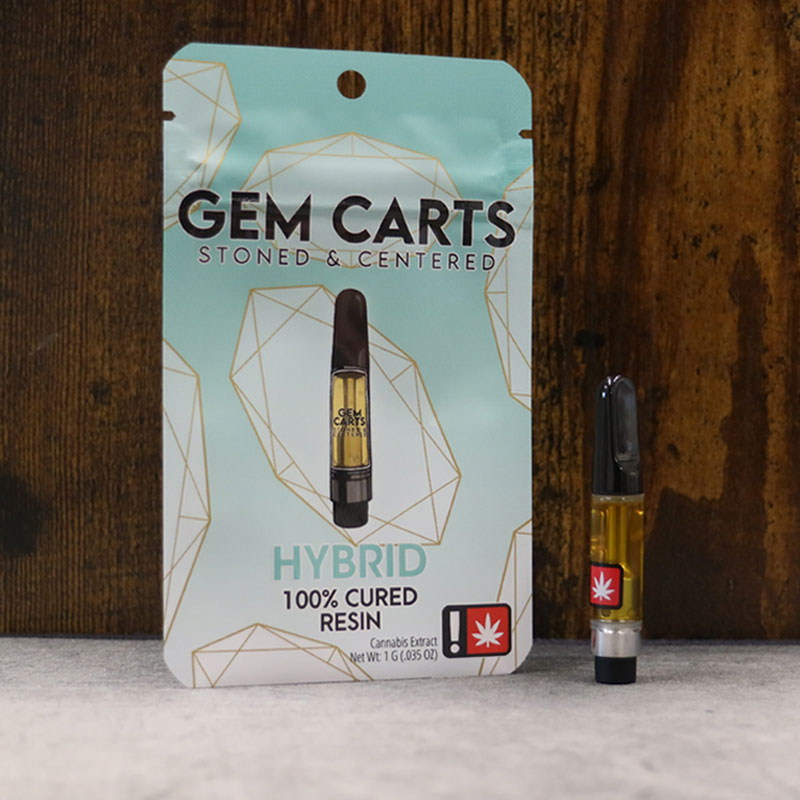
Find The Dope Depot Grape Grove carts at these fine Oregon shops.
- Coming Soon!
- Coming Soon!
- Coming Soon!
If these shops don’t have what you need, tell them it’s time to reup!