

Podcast: Play in new window | Download (Duration: 10:00 — 8.2MB)

If you don’t feel like reading, you can listen to Finn read the post to you. Download the mp3 here.
A Guide to the Chemistry Behind Cannabis Flavor and Aroma
Open a jar of cannabis extract, and the aroma hits your nose long before the cannabinoids do.
You might notice black pepper, citrus peel, fresh pine, flowers, herbs, ripe fruit, damp earth, or something that smells vaguely like a gas station hiding inside a bakery. Those aromas aren’t invented by a marketing department, although marketing departments will certainly take credit for them. They’re produced by volatile compounds found throughout the cannabis plant.
The best-known of these compounds are called terpenes.

Terpenes help shape the aroma and flavor of cannabis flower, concentrates, and cartridges. They’re also produced throughout the natural world, appearing in citrus fruit, pine trees, lavender, black pepper, hops, herbs, flowers, and countless other plants.
Cannabis didn’t invent terpenes. It simply became one of the loudest plants in the garden when it comes to expressing them.
What Is a Terpene?
Terpenes are aromatic organic compounds built from smaller molecular units called isoprenes. Plants produce them for several reasons, including attracting pollinators, discouraging pests, communicating with surrounding organisms, and protecting themselves from environmental stress. We mostly notice them because they smell interesting.
Limonene contributes bright citrus notes. Myrcene can lean earthy, herbal, musky, or fruity. Beta-caryophyllene carries black pepper, wood, and spice. Terpinolene can combine citrus, herbs, pine, flowers, and sweetness into one unusually difficult-to-describe package.
That last point is important. Individual terpenes rarely smell exactly like the shorthand used to describe them.
Limonene doesn’t automatically make an extract smell like a lemon. Beta-caryophyllene doesn’t guarantee that it will taste like someone emptied a pepper grinder into the jar. Aroma depends on concentration, molecular interactions, minor volatile compounds like alcohols, esters, and aldehydes, as well as the processing, storage, and sensitivity of the person doing the smelling.
Terpenes Work as a Profile
When reviewing a PhytoFact sheet, it’s tempting to look at the most abundant terpene and treat it as the explanation for everything. That’s useful, but incomplete.
The dominant terpene usually creates the structural backbone of the profile. Secondary compounds change how that backbone presents itself. Beta-caryophyllene may provide pepper and woody depth, while limonene brightens the top of the profile and linalool softens the edges with floral sweetness.
The same three terpenes can create very different results depending on their proportions and the presence of compounds that aren’t included on standard laboratory panels.
Terpenes are only part of the volatile chemistry found in cannabis. Esters, alcohols, aldehydes, ketones, sulfur compounds, and other trace molecules can strongly influence aroma even when they’re present at extremely low concentrations.
This helps explain why two extracts with similar laboratory results can smell and taste completely different. A terpene panel is a map. It isn’t the entire landscape.
Monoterpenes and Sesquiterpenes
Terpenes are commonly grouped according to their molecular structure.
Monoterpenes are relatively small and volatile. This group includes compounds such as limonene, myrcene, pinene, terpinolene, and ocimene. They often contribute bright, fresh, sharp, fruity, herbal, or pine-like top notes. Because they’re highly volatile, monoterpenes are especially vulnerable to heat, oxygen, processing time, and poor storage.

Sesquiterpenes are larger and generally less volatile. Beta-caryophyllene and alpha-humulene are two important examples. These compounds often contribute heavier notes such as wood, pepper, earth, herbs, and bitterness.
That doesn’t mean monoterpenes are always bright or sesquiterpenes are always heavy. It means their molecular size and volatility influence how they behave during extraction, purging, decarboxylation, storage, and consumption.
What Terpene Percentages Tell You
Terpene percentages provide useful information about the concentration of compounds detected by the laboratory. A product testing at 8% total terpenes contains a larger measured terpene fraction than one testing at 3%. That often corresponds with stronger aroma and flavor, but the total number doesn’t tell the entire story.
Remember folks, composition matters.
An extract containing several terpenes in balanced concentrations may present more complexity than one dominated almost entirely by a single compound. A terpene with a low sensory threshold may also have a disproportionate influence on aroma despite appearing in a relatively small amount.
Laboratory data becomes most useful when it aligns with the actual sensory experience. When an extract tests high in terpenes and fills the room as soon as the lid comes off, the chemistry and the nose agree. When the sheet says 10% terpenes but the jar smells like warm plastic and regret, something may have happened during processing, packaging, transportation, or storage.
Terpenes and Effects
Terpenes are frequently described using words such as calming, energizing, focusing, sedating, uplifting, or relaxing. This is where the conversation needs more precision.

Many terpenes have demonstrated biological activity in laboratory, animal, cell-culture, or non-cannabis research. That makes them scientifically interesting. It does not automatically prove that inhaling a cannabis extract containing a fraction of a percent of that terpene will produce a predictable medical or psychological effect in humans.
The dose matters. The route of administration matters. The other cannabinoids and volatile compounds matter. Individual biology matters. A terpene profile may help explain part of a cannabis experience, but it isn’t a pharmaceutical instruction label.
Throughout this series, we’ll distinguish between established chemistry, early research, preclinical evidence, traditional use, consumer reports, and claims that have been repeated so often that people stopped asking where they came from.
Terpene Preservation Matters
Producing terpenes is the plant’s job. Preserving them is ours.
Heat, oxygen, light, time, vacuum depth, repeated handling, and storage conditions can all change the final profile. Lighter monoterpenes are generally among the first compounds lost during aggressive processing or prolonged exposure.
This is why fresh frozen extraction, carefully controlled hydrocarbon processing, low-temperature purging, and proper storage can produce such expressive results. It’s also why an excellent extract can gradually become dull if it’s repeatedly warmed, opened, and exposed to air. A loud terpene profile is evidence that volatile chemistry survived the trip from the plant to the jar.
Using Real Cannabis Data
Each article in this series will focus on one major terpene and connect it to actual extracts and cartridges made here at The Dope Depot and tested by SC Labs.
Instead of relying on strain names, assumed genetics, or descriptions copied from seed banks, we’ll use measured terpene concentrations from our PhytoFacts database. That allows us to highlight current Red Eye Dabs, Gem Carts, and Pocket Puffers that genuinely contain notable amounts of the terpene being discussed.
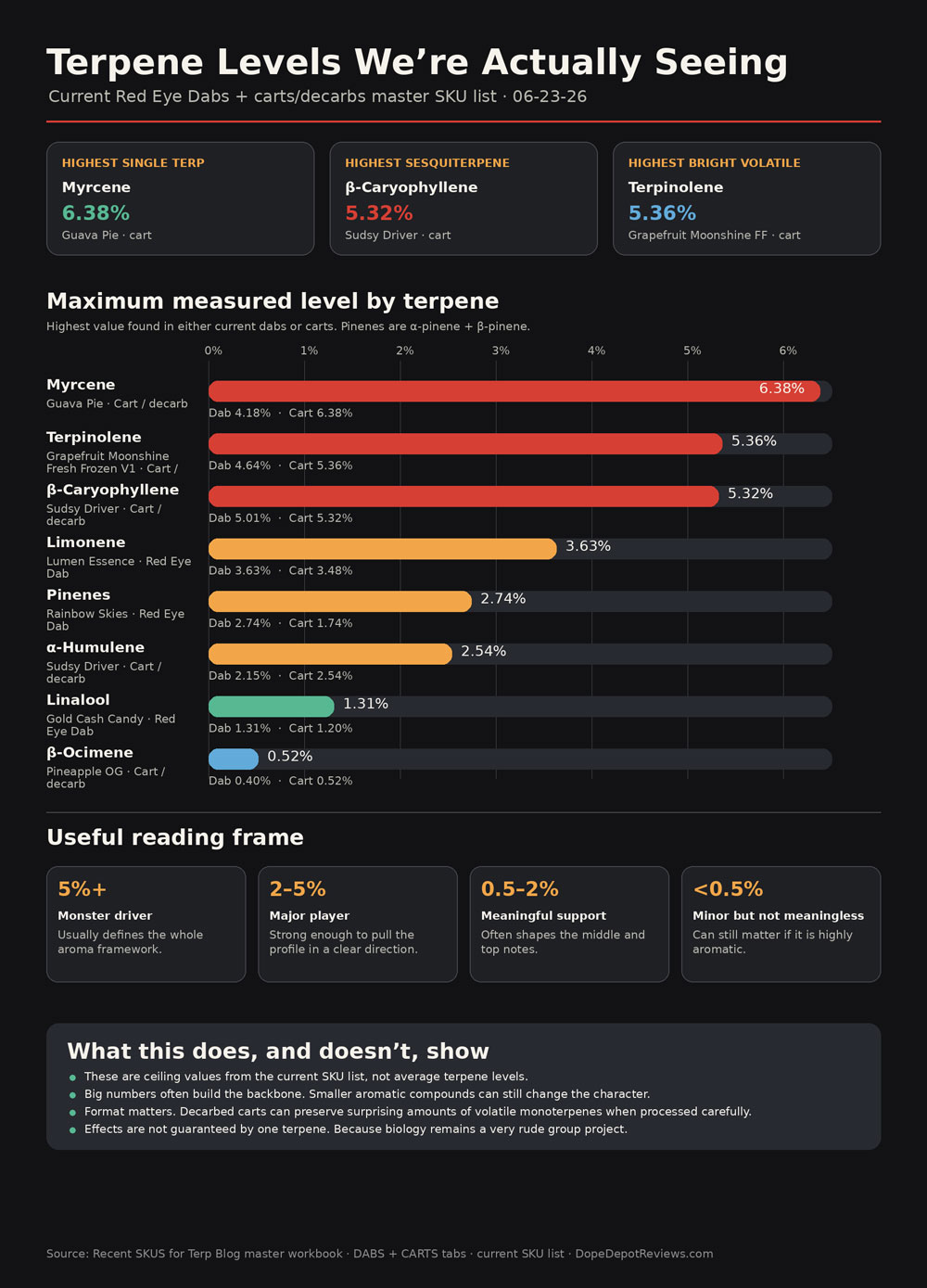
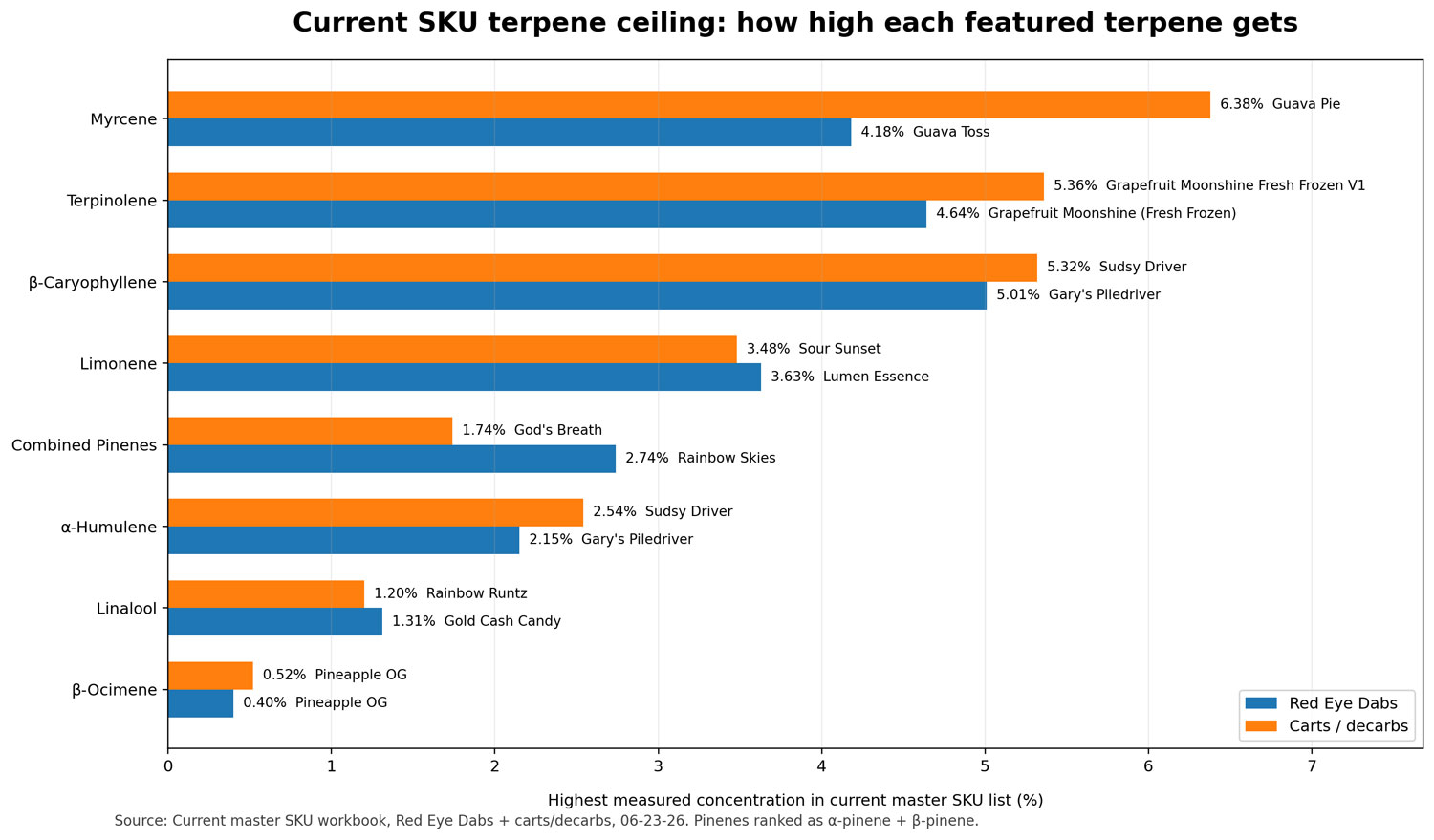
For example, a beta-caryophyllene article might feature blends where that compound dominates the profile. A terpinolene article could compare several Jack-influenced products with our fresh frozen Grapefruit Moonshine. A myrcene article could show how the same terpene presents differently in fruit-heavy, earthy, herbal, and gas-forward extracts.
The goal isn’t to declare one terpene superior to another. The goal is to learn how to read the chemistry, connect it to the sensory experience, and recognize why different blends smell, taste, and feel the way they do.
The Main Terpenes We’ll Be Exploring
In this series, my goal is to take you deep into the science behind several of the most prominent terpenes found across our laboratory data:
By the end, you won’t need to memorize every molecule or start introducing yourself as an amateur organic chemist at parties. You’ll simply have a better idea of what the numbers mean, how they connect to aroma and flavor, and which products demonstrate those compounds particularly well.