In the cannabis world of 2026, marketing is louder than science.
By: Lab Rat Finn
Somewhere along the way, the term “solventless” became shorthand for healthy and safe, at least in cannabis related circles. Heat plus pressure equals clean. Meanwhile, butane equals scary chemical refinery boom boom juice. That narrative probably sells t-shirts and bumper stickers, but what it doesn’t do is survive five minutes under a microscope. Let’s frolic through this minefield together and see what we can learn.
Solventless is NOT the Same Thing as Pure
Rosin is made with heat and pressure. No added solvents, which sounds wholesome at first. It’s got a rustic appeal like something you’d press in a barn with a flannel shirt on while Yellowstone plays in the background.
Here’s the inconvenient part: Rosin extracts everything that melts and squeezes out. That includes everything from lipids, waxes, and cuticular plant debris, to possible microbial remnants, and oxidized plant compounds. Yum!
There is no refinement step. No winterization. No selective fractionation. No true filtration beyond mesh bags. You’re mechanically compressing biomass and vaporizing it. That’s not purity. That’s enthusiasm.
Hydrocarbon Extraction Is Selective Chemistry
Hydrocarbon extraction, typically using butane or propane blends is not chaos. It’s controlled polarity-based extraction. Butane is non-polar. This means it preferentially dissolves cannabinoids, terpenes, and non-polar flavonoids.
It does not efficiently extract things like water soluble contaminants, chlorophyll, sugars, and many polar degradation byproducts. This is basic chemistry.
In a properly engineered closed loop system solvent is recovered, residual solvent is tested to ppm thresholds, and product is purged under controlled vacuum.
In Oregon and other regulated markets, residual solvent limits are tightly enforced. The data simply does not support the horror story. What is dangerous is poorly made product. That applies to rosin presses in garages, open blasting in backyards, or running closed loop extraction systems in your mom’s basement.
Heat Is Not Neutral
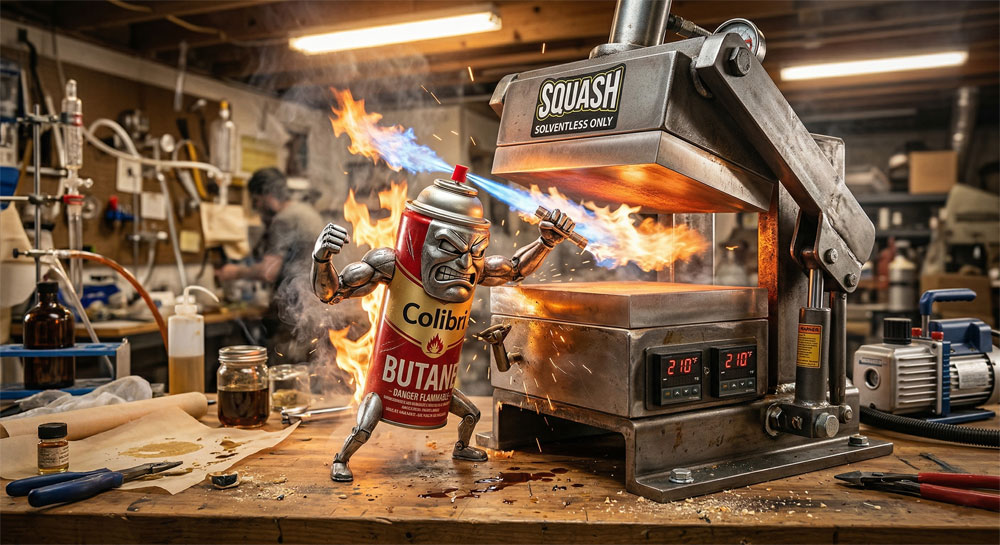
Rosin advocates love saying “no solvents.” But they skip the part where press temps often exceed 180°F to 220°F. Take that plus the mechanical pressure, and you have a recipe for oxidation acceleration, on top of losing terpenes which volatilize rapidly under heat.
Terpenes are fragile molecules. You already know this if you’ve stared at lab sheets long enough, or accidentally left a jar of dabs open on the table overnight.
Monoterpenes like limonene, myrcene, and pinene have boiling points low enough that heat alone can strip them. When you combine heat, pressure, and oxygen exposure, you’re actively degrading these volatile compounds. That isn’t just theoretical, that’s pure thermodynamics. The chemistry is not ambiguous.
Residual Solvents vs Residual Contaminants
Let’s compare the risks logically.
Hydrocarbon Extract Risk Profile:
- Residual butane/propane (measurable, regulated, purged)
- Mitigated via vacuum and testing
- Potential for Boom Boom
Rosin Risk Profile:
- Lipid content
- Potential pesticide concentration
- Microbial remnants
- Unknown thermal degradation byproducts
Residual solvents are scary because they’re named chemicals. But in legal markets, they are tested, documented, and enforced. Lipids combusting at high temps in a nail? Not nearly as romantic, but very real.
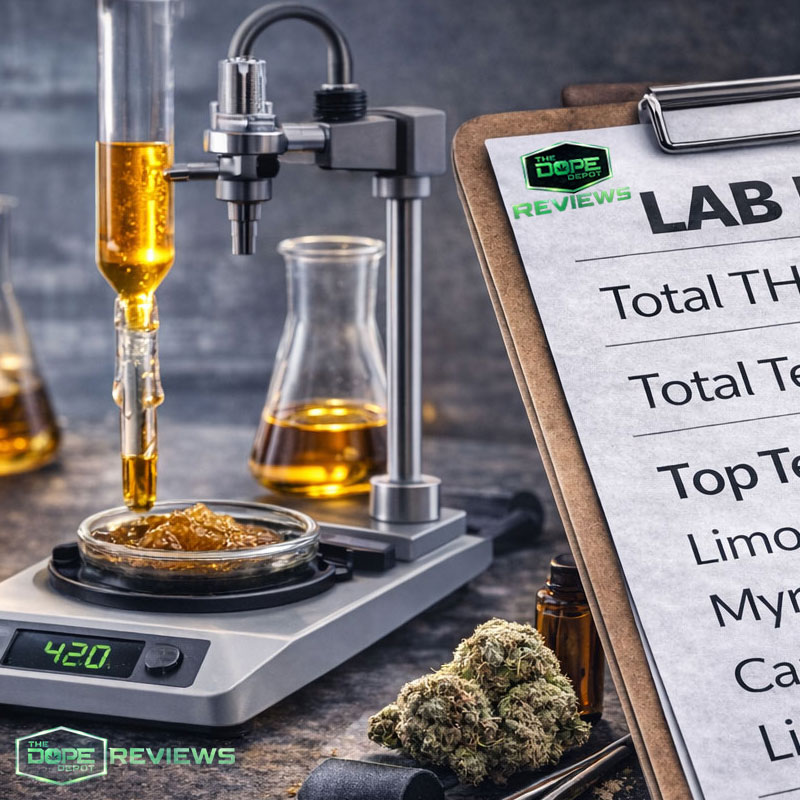
The Terpene Retention Myth
People assume solventless equals more flavor. The reality isn’t nearly as romantic. Hydrocarbon extraction occurs at low temperatures. Often subzero. That preserves volatile monoterpenes more effectively than pressing at elevated heat.
A properly run BHO or PHO system can capture delicate top note terpenes. You can then separate fractions and reintroduce or balance terpene profiles and blends as needed.
Rosin has one move. The hot squish.
Terpenes don’t care about marketing language.
“Butane Is Toxic” Is a Lazy Argument
So is oxygen at the wrong dose. So is water. Remember, the dose makes the poison. Butane is used in many industries including pharmaceutical extraction, food processing, and essential oil refinement. It evaporates cleanly when properly purged due to it’s low boiling point.
The danger historically came from open blasting, amateur setups, and the lack of regulation. Just because you know how to do it, doesn’t mean you know how to do it safely.
That was then, this is now. That era is not the regulated 2026 lab environment we find ourselves in today. If someone is arguing against hydrocarbons using 2012 YouTube explosion clips, they are not arguing in good faith.
The Actual Safety Variable
The real safety factor is, and has always been, operator competence, lab compliance, and testing rigor. Not whether someone used heat or a solvent.
A well-built hydrocarbon lab with closed-loop systems, certified solvents, proper purging, and third-party testing is statistically safer than a guy pressing moldy material because “it’s solventless bro.” Chemistry does not reward vibes.
The Purity Paradox
Here’s the paradox. The method that sounds industrial and scary is often more controlled and chemically selective. The method that sounds natural and wholesome is often less refined and less selective.
That doesn’t mean rosin is bad. It means purity is not defined by the absence of a solvent.
Purity is defined by:
- Selectivity
- Controlled processing
- Measurable contaminant thresholds
- Transparency
If you want clean chemistry, you measure it. If you want comfort, you use marketing language.
Hydrocarbon extraction is not inherently superior because it uses solvents. It is superior when the goal is precision, terpene preservation, containment reduction, and reproducibility.
Rosin is romantic. Hydrocarbons are engineered. Pick your philosophy. Just don’t pretend one of them is holy water. Afterall, water is also a solvent.