
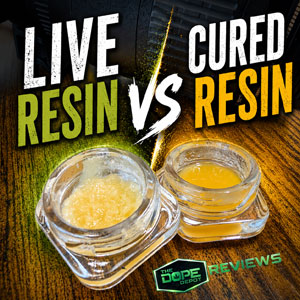
Walk into just about any dispensary and you’ll eventually hear someone ask for live resin. Sometimes they’ll ask because they love the flavor. Sometimes they’ll ask because someone on Reddit told them cured resin is trash. Sometimes they’ll ask because the package looked cooler.
As with most things in cannabis, the reality is a bit more complicated. Live resin and cured resin aren’t competitors so much as two different snapshots of the same plant taken at different moments in its life. One isn’t automatically better than the other. They’re simply different approaches with different strengths.
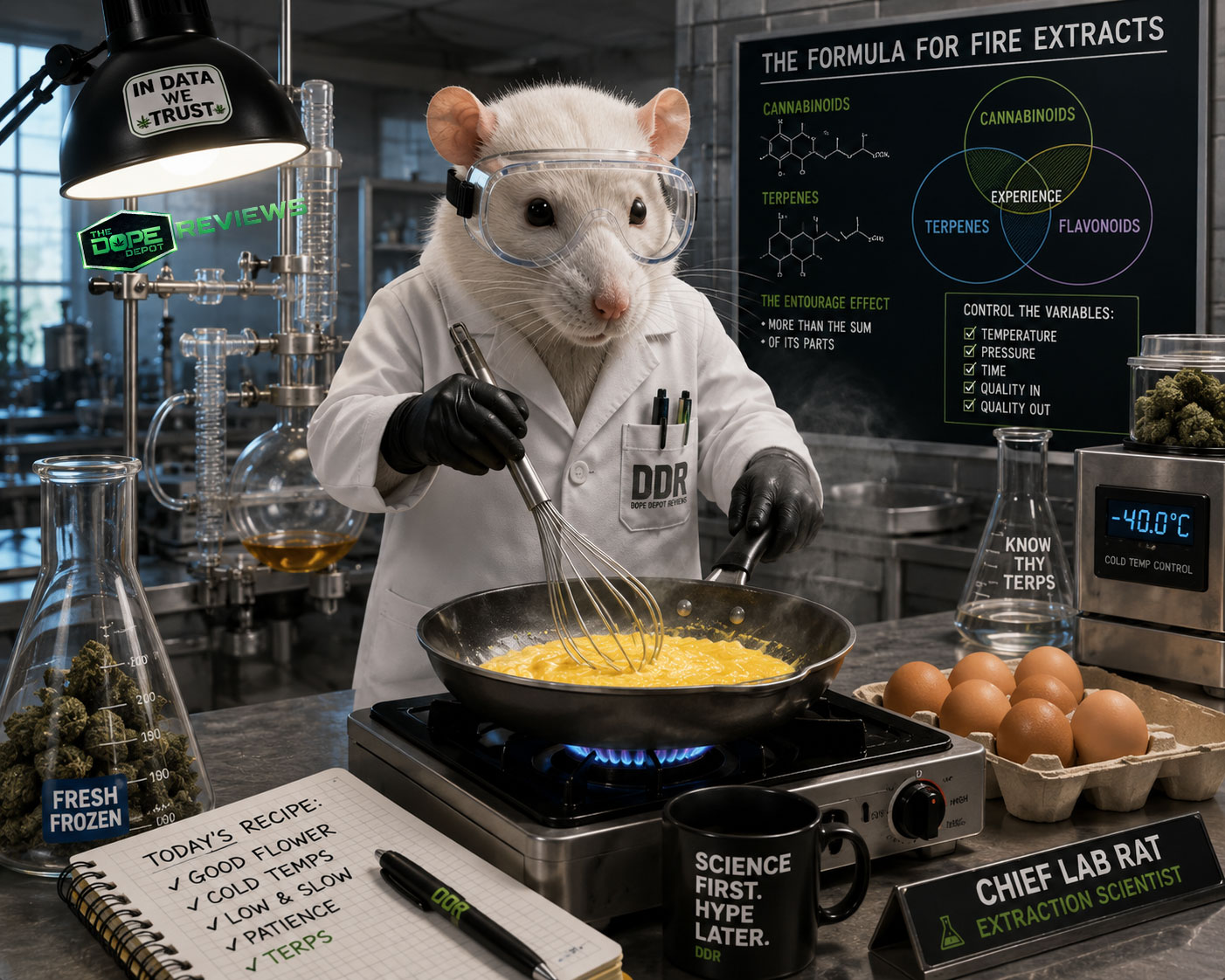
A wise friend once broke it down to me like this. Weed extracts are like eggs. You can have your eggs cooked in various different ways, but is one way better than another? It’s all relative at the end of the day. Some people like scrambled eggs, some people like them over easy or with a nice hollandaise sauce. It’s really just personal preference and what you have available to you in your particular region.
Let’s break it down.
What Is Live Resin?
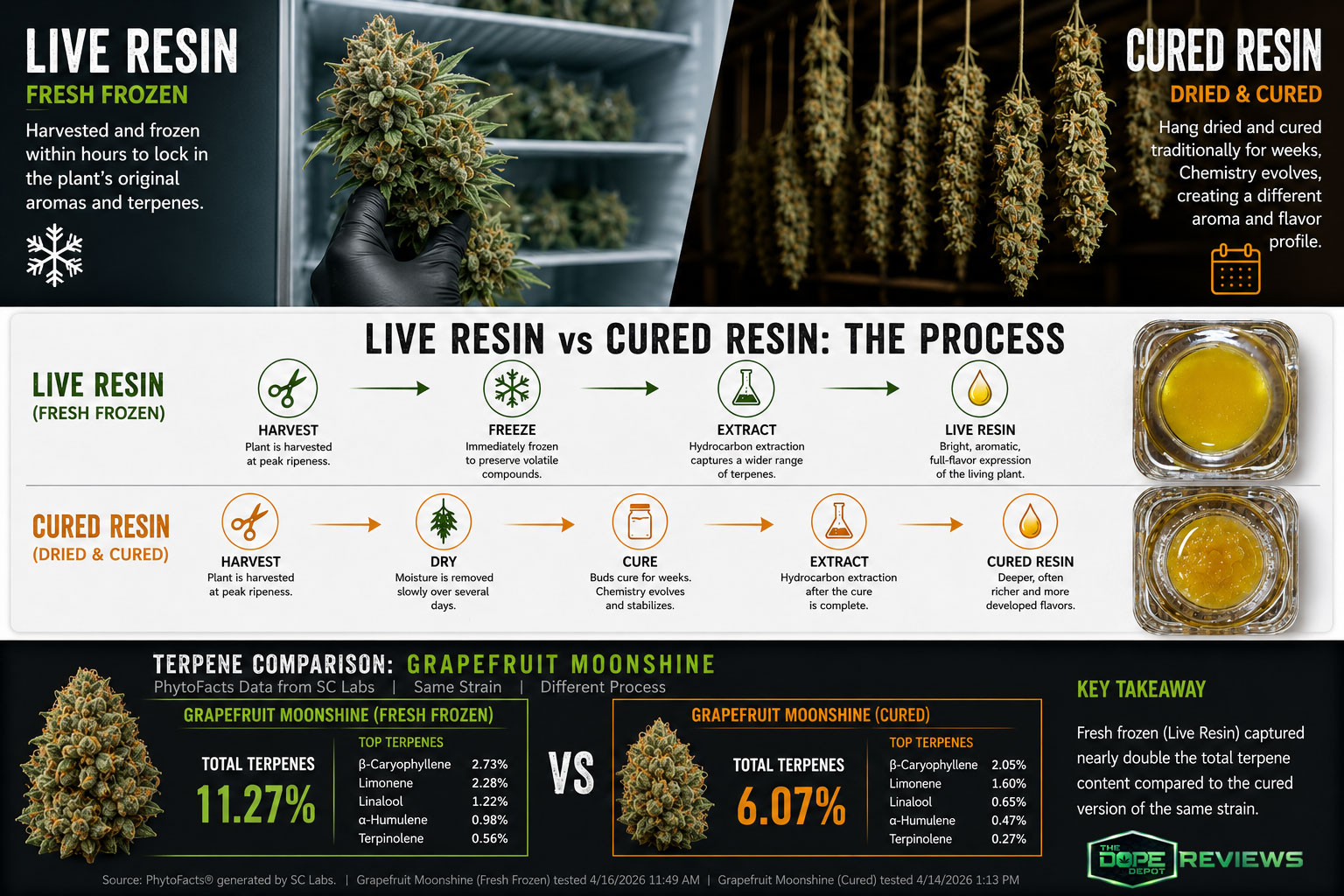
Live resin starts with fresh cannabis that is harvested and frozen almost immediately. Instead of hanging the plant to dry and cure for several weeks, growers freeze the material while it’s still fresh. This process is often called fresh frozen.
The goal is simple. Preserve as much of the plant’s original chemistry as possible. Many of the compounds responsible for aroma and flavor are highly volatile. Drying and curing naturally change the chemical profile of the plant. Freezing helps lock more of those compounds into place before extraction begins.
The fresh frozen material is then extracted using extremely cold hydrocarbons like butane, propane, or a blend of both. The result, once purged and finished, is what we know as live resin.
What Is Cured Resin?
Cured resin starts much the same way. A cannabis plant is harvested. The difference is what happens next. Instead of being frozen immediately, the flower is dried and cured using traditional methods. This process can take several weeks depending on the grower’s preferences.
During curing, moisture slowly leaves the flower while various chemical reactions continue to occur inside the plant. Some compounds break down. Others transform. Certain aromas become less intense while others become more pronounced. After curing is complete, the material is extracted into cured resin using extremely cold hydrocarbons.
The Biggest Myth
Here’s the biggest misconception. Live resin is not simply cured resin with more terpenes. It’s more accurate to think of them as preserving different versions of the same plant. Fresh frozen material often captures bright, vibrant, highly volatile aromas that might otherwise change during curing. This is why live resin generally tastes more “fresh” than a cured resin of the same strain, when extracted the same way.
Cured material develops its own unique characteristics through the drying process. Neither profile is inherently superior. Some strains absolutely shine as live resin. Others develop deeper, richer flavors after curing.
At the end of the day when grown and processed properly, they can both be excellent, they’re just different experiences, and probably different price points.
Does Live Resin Have More Terpenes?
Often, but not always. Fresh frozen extraction can preserve significant amounts of volatile aromatic compounds that might otherwise change during curing. We’ve seen this ourselves while reviewing products and digging through our PhytoFacts database.
Take our award-winning Grapefruit Moonshine as an example. The cured version carries approximately 6% terpene content while the fresh frozen version exceeds 11%. That’s a substantial difference.


But here’s the important part. As much as Finn likes to argue against this point, a higher terpene content doesn’t automatically mean a better experience. Some cured extracts produce incredibly rich and complex flavors despite lower overall terpene percentages. You can even get to a point where there’s too much terps, and the extract can become irritating to the throat and lungs. Some people can be a lot more sensitive to terpenes than others, which is why it’s important to know thyself when shopping for extracts.
Does Live Resin Get You Higher?
Not necessarily. This is where marketing sometimes gets ahead of science. The psychoactive effects of cannabis depend on a combination of cannabinoids, terpenes, individual metabolism, tolerance, endocannabinoid system, and a laundry list of biological variables that scientists are still trying to untangle.
A cured resin testing at 90% cannabinoids can absolutely hit harder than a live resin testing at 80%. Likewise, many consumers report that highly aromatic live resins produce more nuanced, longer lasting experiences. Both observations can be true. The answer depends on what you’re looking for.
Why Doesn’t Everyone Just Make Live Resin?
Because it’s expensive. Fresh frozen cannabis requires freezer space, specialized handling, faster logistics, and careful extraction planning. Cured flower is, in comparison, much easier to store and transport.
It also gives processors access to material that might not have been intended for fresh frozen production. From a production standpoint, both approaches make sense. From a consumer standpoint, having both options is a good thing. Variety tends to beat uniformity.
Which One Is Better?
The least satisfying answer is usually the correct one. It depends. If you love bright citrus notes, loud fruit aromas, and tasting something that feels remarkably close to the living plant, live resin may become your favorite.
If you prefer deeper earthy notes, gas, funk, dessert profiles, or the characteristics that develop through curing, cured resin might be exactly what you’re after. Many experienced concentrate consumers keep both around. Different moods. Different strains. Different sessions.
The Lab Rat Verdict
The internet loves turning cannabis into a series of winner-take-all arguments. Live resin versus cured resin. Solventless versus hydrocarbon. THC versus terpenes. The truth is usually less dramatic.
Live resin preserves one version of the plant. Cured resin preserves another. Both can produce exceptional extracts. Both can produce mediocre extracts if the starting material or processing isn’t up to par. What it mostly comes down to is this: Good cannabis in equals good cannabis extracts out.
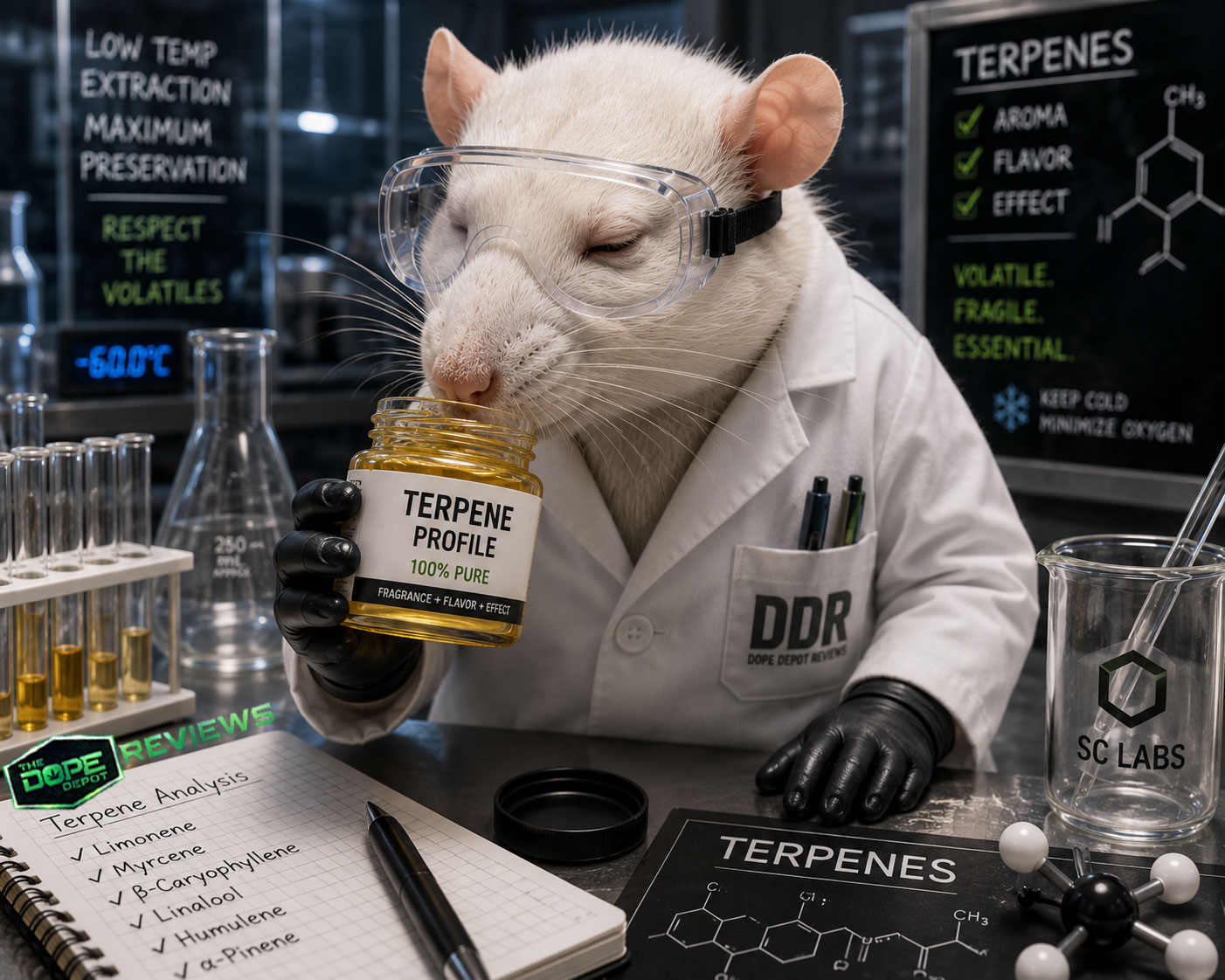
The next time you’re shopping for concentrates, don’t ask which category automatically wins. Ask where the material came from. Look at the cannabinoid content. Check the terpene profile. Find producers and processors you trust. Then buy what smells and tastes good to you.
The nose always knows, as we like to say around the lab. It’s a much more reliable strategy than letting a sticker on the jar make the decision for you. Human history has enough examples of blindly trusting labels and marketing.
Check out our fresh frozen warez below and see which Oregon shops have them in stock so you can try some! Our lab rats say they are phenomenal!